Foundations rarely get the attention they deserve until something goes wrong. Cracks in drywall, sloping floors, sticking doors, pooling water along the base of a wall. These subtle signals often trace back to what lies beneath a structure. In the world of building foundations, performance is everything. When soil conditions are unpredictable or access is limited, traditional concrete footings are not always the most efficient or reliable solution. That is where helical piles have become an increasingly valuable tool.
Before diving into the mechanics of helical piles, it is worth acknowledging that foundation performance does not exist in isolation. Structural stability works hand in hand with proper drainage and moisture control. Issues that compromise soil bearing capacity often overlap with water management challenges, which is why solutions such as interior and exterior basement waterproofing frequently complement structural foundation strategies. When water is controlled and loads are transferred correctly, buildings perform as intended for decades.
Why Soil Conditions Matter More Than You Think
Every foundation decision begins with soil. Clay expands and contracts. Sandy soils shift under load. Organic soils compress over time. Frost penetration adds another layer of movement, particularly in climates where freeze thaw cycles are common.
According to data published by the Canada Mortgage and Housing Corporation, housing starts remain strong across the country, placing continued pressure on urban lots with varying and often challenging soil conditions. New construction is no longer limited to ideal ground. Builders are increasingly working with infill sites, waterfront properties, tight access corridors, and areas with poor native soil bearing capacity.
In these scenarios, foundation systems must adapt. Helical piles offer a precise, engineered response to complex ground conditions.
What Are Helical Piles?
Helical piles are steel shafts fitted with one or more helical plates that resemble large screws. They are mechanically advanced into the ground using hydraulic torque motors until they reach a predetermined depth and torque rating.
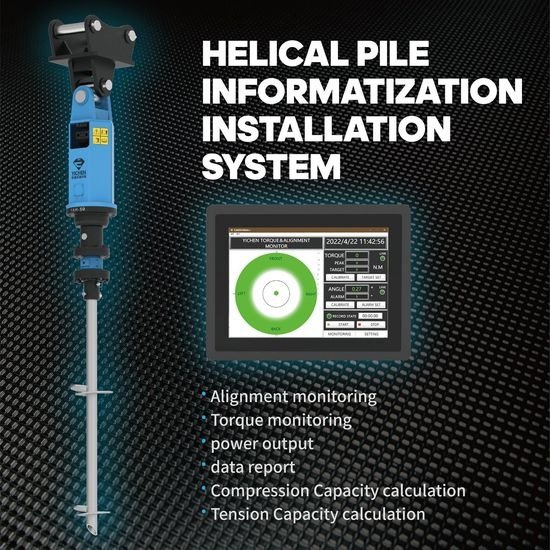
Unlike driven piles that rely on impact or bored systems that require excavation and curing time, helical piles are installed with minimal vibration and immediate load bearing capability. The torque measured during installation correlates directly with load capacity, allowing installers to verify performance in real time.
This predictability is one of their greatest strengths.
Where Helical Piles Excel
Helical piles are not a universal replacement for every foundation type, but they provide significant advantages in several scenarios.
Limited Access Sites
Urban additions, deck retrofits, and interior underpinning projects often leave little room for excavation equipment. Compact hydraulic drive heads can operate in confined spaces, including basements, crawl spaces, or close to property lines.
See also: Rising Standards in Online Journalism
Poor or Unstable Soil
Where upper soil layers cannot support structural loads, helical piles can bypass weaker strata and anchor into denser material below. This reduces settlement risk and improves long term performance.
Fast Turnaround Projects
Traditional concrete footings require excavation, forming, pouring, and curing. Helical piles are installed and ready to accept structural loads almost immediately. This efficiency reduces labor time and site disruption.
Minimal Vibration Requirements
Projects near existing structures demand controlled installation methods. Helical piles generate far less vibration than driven alternatives, making them suitable for sensitive environments.
The Engineering Behind the Performance
The real value of helical piles lies in their engineered design. Each pile is selected based on load requirements, soil classification, and structural application. Shaft size, plate diameter, spacing, and depth are calculated in advance.
During installation, torque readings provide measurable confirmation that the pile has achieved the specified load capacity. This direct feedback reduces uncertainty compared to poured footings where soil bearing capacity assumptions may not always match reality.
For foundation repair and underpinning applications, this level of control is critical. When stabilizing a settling structure, every pile must perform consistently to prevent differential movement.
Applications Beyond New Construction
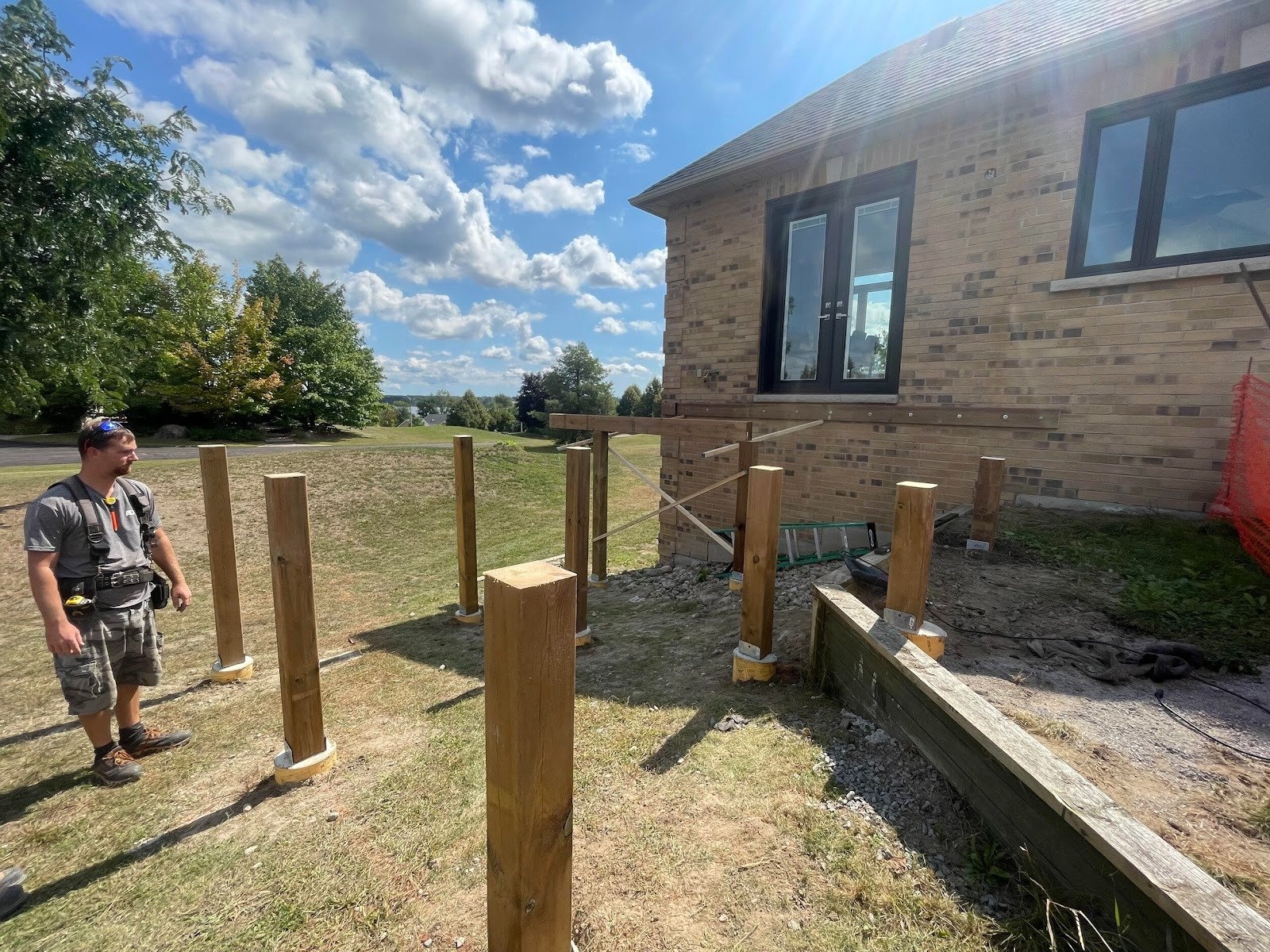
While new residential construction frequently uses helical piles for decks and additions, their application extends well beyond that scope.
They are routinely used for:
- Underpinning existing foundations experiencing settlement
- Supporting sunrooms and home extensions
- Stabilizing retaining walls
- Forming foundations for light commercial buildings
- Boardwalks and waterfront structures where excavation is impractical
In repair scenarios, helical piles can transfer the structural load from compromised soil to stable bearing layers below. This stops further settlement and may allow for controlled lifting of affected areas.
Integrating Drainage and Structural Integrity
Foundation performance depends on more than vertical load transfer. Water management plays an equally critical role in maintaining soil strength.
When groundwater accumulates near foundation walls, it softens soil and increases lateral pressure. Over time, this pressure can contribute to shifting, cracking, and settlement. In these situations, combining structural reinforcement such as helical piles with strategic waterproofing measures creates a comprehensive solution rather than a temporary fix.
Addressing both structural and environmental factors ensures the foundation system works as a unified whole.
Installation Process in Practice
The installation sequence is straightforward but must be executed with technical precision.
- Site assessment and load calculation
- Soil evaluation and engineering design
- Equipment positioning and alignment
- Hydraulic advancement of the pile while monitoring torque
- Cutting to grade and bracket attachment
Because there is no need for large scale excavation, sites remain cleaner and safer. There is also less spoil material to remove, which reduces environmental disturbance.
For occupied homes undergoing underpinning, this minimally invasive approach allows work to proceed with limited disruption to daily life.
Long Term Performance and Durability
Helical piles are manufactured from structural steel and can be galvanized or coated for corrosion resistance depending on soil conditions. When properly designed and installed, they provide durable, long lasting support.
Their modular design also allows for extensions. If deeper bearing strata are required than anticipated, additional shaft sections can be added during installation. This adaptability is particularly valuable on sites where soil depth varies across the footprint of a structure.
Unlike concrete footings, which rely heavily on accurate soil bearing estimates at a shallow depth, helical piles derive capacity from deeper, more stable layers.
Cost Considerations and Value
Cost discussions around foundation systems often focus on upfront pricing. However, the broader value picture includes:
- Reduced excavation costs
- Faster project completion
- Lower risk of settlement related repairs
- Improved construction scheduling
On sites where traditional excavation would require extensive soil removal or shoring, helical piles can offer cost efficiency that offsets material expenses.
The key is evaluating total project cost rather than comparing materials in isolation.
When Helical Piles May Not Be Ideal
There are conditions where helical piles are not the preferred solution. Extremely dense gravel layers, obstructions such as large buried debris, or certain rock profiles may require alternative approaches.
A thorough site inspection and engineering evaluation determine suitability. Foundation strategy should always respond to site realities rather than forcing a single solution across every project.
A Shift Toward Precision in Foundation Work
The construction industry continues to evolve toward systems that offer measurable performance, reduced disruption, and adaptability. Helical piles align with this direction. They provide data driven installation, predictable load capacity, and flexible application across residential and light commercial projects.
As buildable lots become more constrained and soil variability increases, foundation systems must respond with equal precision. Helical piles are not simply a trend but a practical engineering solution shaped by real site challenges.
Strong foundations are rarely visible once construction is complete. Yet their impact is felt daily in the stability, comfort, and longevity of every structure they support. Whether for new construction, additions, or structural remediation, helical piles represent a modern approach to building on solid ground.